Qualitative research plays an essential role in implementation science. It helps researchers understand complex contexts, explain implementation processes, identify barriers and facilitators, and inform the refinement of interventions and implementation strategies. As the field has evolved, qualitative inquiry has moved beyond exploring experiences, meanings, and contexts. It is increasingly used to support intervention delivery, program scale-up, policy translation, and real-world decision-making.
However, the design, analytical approach, and criteria for rigor in qualitative research may vary considerably depending on its epistemological perspective, purpose, stage, and intended use. Clearly positioning qualitative inquiry within implementation science has therefore become an important methodological issue for the continued development of the field.
Xuejun Yin, a researcher at the Institute of Biomedical Innovation and the School of Public Health, recently published a methodological paper titled “Rethinking Qualitative Inquiry in Implementation Science: Clarifying Purpose, Design, and Rigor” in Implementation Science, a leading journal in the field.
The paper examines how qualitative research is positioned, designed, and evaluated within implementation science. It notes that qualitative studies are often expected to serve different functions. Some seek to develop an in-depth understanding of context or generate conceptual insights, while others are intended to provide timely evidence for program scale-up, the adaptation of implementation strategies, or near-term practice decisions.
When these differences are not made explicit, qualitative studies may be designed or assessed using criteria that do not align with their intended purpose. Such mismatches are particularly likely to arise in relation to the role of theoretical frameworks, openness to unexpected findings, and the definition of methodological rigor.
To address this issue, the authors propose a “positioning framework” for qualitative inquiry in implementation science. The framework places qualitative research along a continuum comprising three orientations: Generative, Pragmatic, and Action-oriented.
Generative inquiry prioritizes contextual depth, exploration, and conceptual development. Action-oriented inquiry is structured to produce timely findings that can directly inform decisions and practice. Pragmatic inquiry occupies the space between these two orientations.
A study’s position on this continuum is shaped by several factors, including its research purpose, time and resource constraints, the existing knowledge base concerning the topic or context, and stakeholder expectations. The framework also illustrates how these orientations influence key elements of qualitative research, including the formulation of research questions, the use of theory, sampling, data collection, analysis, and reporting.
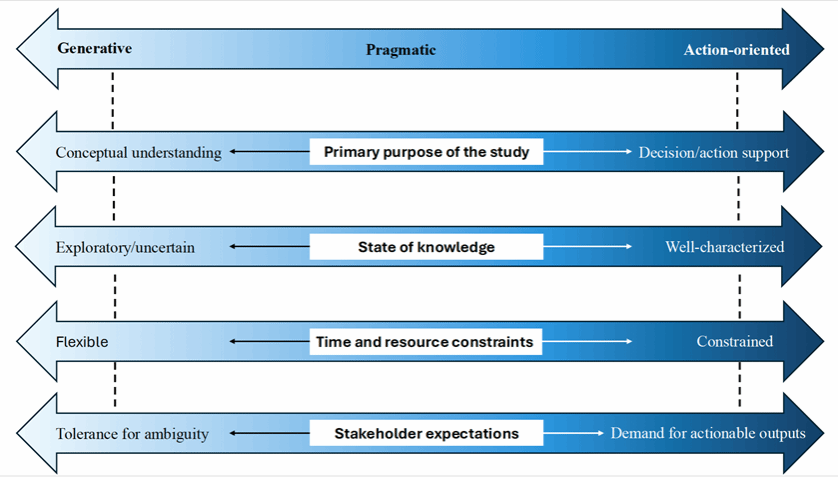
A key contribution of the paper is its argument that qualitative research in implementation science should not be treated as a single, homogeneous methodological approach. Nor should rigor be reduced to a fixed set of universal criteria. Instead, research design and quality should be assessed in relation to the type of knowledge a study seeks to generate, the practical purpose it serves, and the contribution it is expected to make.
Making methodological positioning more explicit may help reduce mismatched expectations in research design, peer review, and journal evaluation. It may also promote a more transparent, systematic, and purposeful use of qualitative inquiry in implementation science.
Xuejun Yin is the first and corresponding author of the paper, with Nanchang University serving as the sole corresponding institution.
Read the full article:
https://link.springer.com/article/10.1186/s13012-026-01519-x



 Address: No. 1299 Xuefu Avenue, Honggutan District, Nanchang City, Jiangxi Province
 Tel:+86-0791-83968485
 E-mail:ibi@ncu.edu.cn
 NANCHANG UNIVERSITY

